As Moscow expands its Arctic fleet, more firms face sanctions scrutiny
As Russia expands its Arctic fleet and Europe hunts a maritime “shadow fleet” around subsea cables and pipelines, quiet design bureaux like Petrobalt still operate outside Western sanctions.
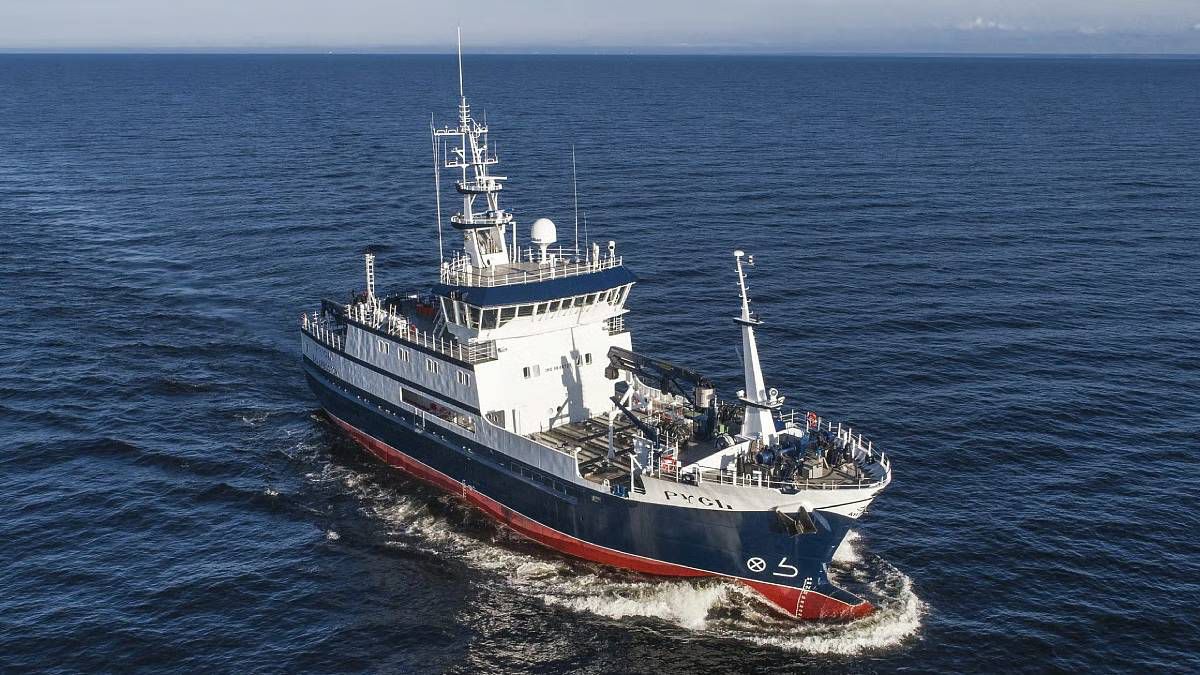
For decades, the Arctic was viewed largely as a commercial frontier, defined by shipping routes, fisheries and untapped energy reserves. Today it has become one of the principal theatres of geopolitical competition between Russia and the West.
As relations with NATO have deteriorated, Moscow has dramatically expanded its military infrastructure across the High North while investing heavily in Arctic logistics, ice-class shipping and maritime surveillance capabilities. This has created an entire industry dedicated to furthering Russia’s Arctic interests, from the state-owned United Shipbuilding Corporation to specialist engineering and design firms like PKB Petrobalt.
The so-called “Northern Sea Route” has become central to Russia’s long-term strategic ambitions. Beyond providing access to vast natural resources, it protects the country’s northern naval bases, supports year-round commercial shipping and offers an increasingly important trade corridor as Western sanctions continue to reshape Russia’s economy.
In parallel, European governments have become increasingly concerned that ostensibly civilian vessels, including fishing trawlers, research ships and Arctic-capable commercial vessels, are playing a growing role in intelligence gathering and surveillance around critical underwater infrastructure.
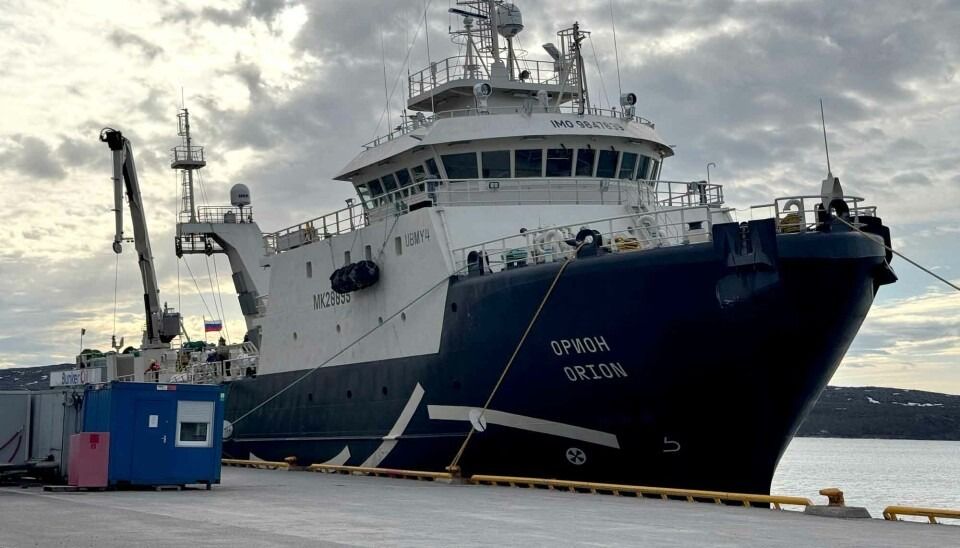
Authorities across Europe have responded by increasing naval patrols, tightening restrictions on Russian fishing fleets and investigating what security officials increasingly describe as a maritime “shadow fleet” operating around subsea cables, pipelines and other strategic infrastructure.
Western governments have imposed sanctions on many of the organisations underpinning Russia’s Arctic shipbuilding and naval modernisation programmes.
The EU, UK and USA have targeted United Shipbuilding Corporation, Russia’s dominant state-owned shipbuilding conglomerate, together with several of its principal design bureaux and subsidiaries (e.g. Malakhit Marine Engineering Bureau, Lazurit Central Design Bureau, Almaz Central Marine Design Bureau and Severnoye Design Bureau).
The measures reflect a growing recognition among Western governments that shipyards and design bureaux form an integral part of Russia’s defence-industrial base and its ability to sustain military and dual-use maritime programmes.
However, the Western sanctions regime has not been comprehensive with companies such as PKB Petrobalt escaping scrutiny.
Founded in Saint Petersburg in 1995, Petrobalt specialises in the design of ice-class vessels, fishing trawlers, patrol ships and Arctic-capable commercial craft. Unlike Russia’s large state-owned shipyards, which physically construct vessels, Petrobalt occupies a less visible position within the maritime industry, producing the engineering documentation, technical specifications and detailed ship designs from which vessels are ultimately built. This has allowed the company to remain largely outside public scrutiny despite its involvement in projects spanning Russia’s government and security sectors.
Petrobalt’s work reflects a broader trend within Russia’s Arctic strategy, where the distinction between civilian and strategic maritime infrastructure has become increasingly blurred. The company designed the Project 22120 Purga-class patrol vessels operated by the FSB Border Service, ice-strengthened ships deployed along the Northern Sea Route to perform border security, fisheries enforcement, search-and-rescue and wider maritime security functions.
It has also participated in projects involving Arctic logistics operators, Gazprom-related shipping programmes and vessels supporting Russia’s northern transport corridors. While many of these vessels are nominally civilian, they operate within an increasingly integrated maritime ecosystem supporting Russia’s wider strategic objectives.
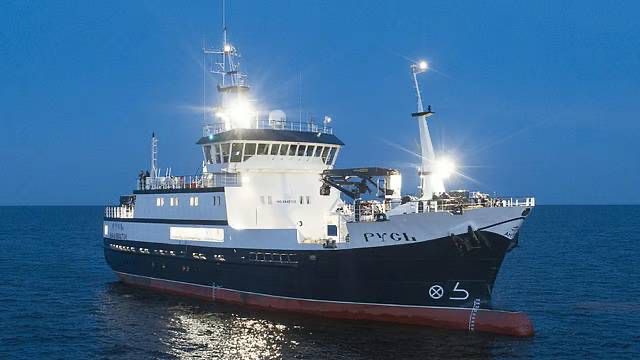
Those concerns came into sharp focus in September 2025, when the Mekhanik Stepanov, a Russian fishing vessel designed by Petrobalt, drifted near critical energy infrastructure in the Danish Straits after reportedly suffering an engine failure close to the southern entrance of the Øresund. Danish naval vessels, the Swedish Coast Guard and a NATO vessel monitored the ship as it remained close to strategically important infrastructure.
The incident attracted additional attention after it emerged that the vessel was owned by interests connected to Norebo, one of Russia’s largest fishing companies, which was at the time facing growing scrutiny from European authorities over allegations that Russian fishing vessels were being used to support surveillance activities in northern European waters.
Petrobalt has also designed vessels for Murman Seafood, another Russian fishing company sanctioned by the European Union in 2025 over alleged involvement in maritime surveillance activities. Yet despite working alongside numerous sanctioned companies and state institutions, Petrobalt itself remains outside UK, EU and US sanctions regimes.
In March 2022, shortly after Russia launched its full-scale invasion of Ukraine, a 15 per cent stake in Petrobalt was acquired by Alliance Group, a Moscow-based project management company run by Vitaly Keondzhyan and Vladimir Zotov.
Like Petrobalt, Alliance Group has rarely acted as a manufacturer itself, instead functioning as a facilitator that structures financing, coordinates international partnerships and develops the corporate architecture underpinning complex state-linked projects. Its most significant aerospace involvement was the Sukhoi Superjet programme, Russia’s flagship civilian aircraft project, where Keondzhyan served on the board of Sukhoi Civil Aircraft and Alliance helped manage international partnerships.
Keondzhyan has controlled Alliance Group for decades, while Vladimir Zotov has served as deputy director since 2006. Their business interests extend across companies in Russia, Serbia, Montenegro and Cyprus, reflecting a broader pattern in which ownership structures, investment vehicles and international partnerships have become increasingly important to sustaining strategically significant industrial programmes amid growing international isolation.
As European governments intensify efforts to counter Russia’s activities in the Arctic and protect critical underwater infrastructure, companies operating quietly in the background of these programmes may increasingly become as strategically significant as the vessels they help create.


