Turkish police detain women‑rights lawyer and journalists at Istanbul LGBT‑rights protest
On 16 September 2026 police arrested dozens of demonstrators outside Istanbul’s Beyazıt Courthouse, including a women‑rights lawyer and at least two journalists, a development confirmed by Spiegel Panorama and cited by the opposition newspaper Birgün.
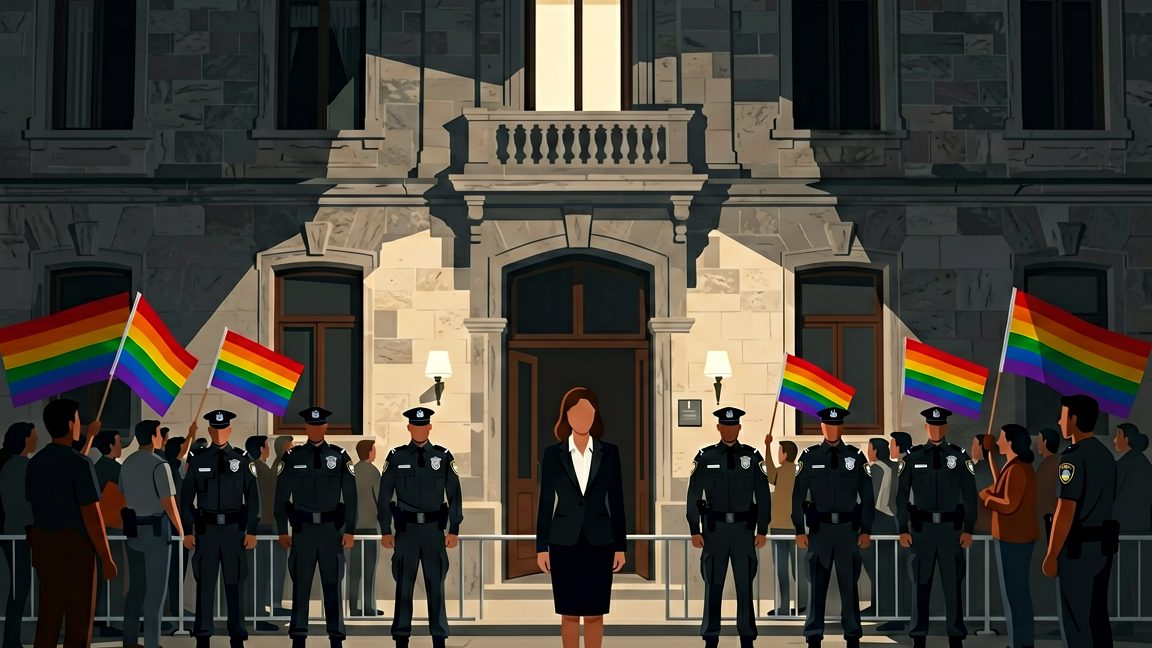
Turkish police detained dozens of demonstrators, among them a women‑rights lawyer and at least two journalists, during an LGBT‑rights protest outside Istanbul’s Beyazıt Courthouse on 16 September 2026.
Protest and arrests
The demonstration was organised to denounce a series of police raids on LGBT organisations that had taken place over the preceding weekend. Activists gathered in front of the courthouse to read a statement insisting that “lesbian, gay, bisexual or trans identities are not prohibited in Turkey”. According to a report by Spiegel Panorama, “Bei dieser LGBT‑Kundgebung sind nun Berichten zufolge erneut Dutzende Personen festgenommen worden, darunter auch Journalisten und Anwälte.” The article, dated 17 September 2026, confirms that police detained “dozens” of participants on the day of the protest.
The opposition newspaper Birgün adds that among those arrested were “eine Rechtsanwältin vom Zentrum für Frauenrechte der Anwaltskammer Istanbul, sowie mindestens zwei Journalisten.” This identifies the lawyer as a member of the Istanbul Bar Association’s Women’s Rights Centre and specifies the minimum number of journalists taken into custody.
Human‑rights reaction and government rhetoric
Emma Sinclair‑Webb, the Turkey representative of Human Rights Watch, is quoted in the same Spiegel Panorama piece as saying that the arrests “show the determination of the Turkish government to criminalise LGBT‑people.” The comment links the police action to a broader pattern of repression against sexual‑minority activists.
President Recep Tayyip Erdogan and other government officials have repeatedly made openly anti‑LGBT statements, as noted in the source excerpts: “Präsident Recep Tayyip Erdogan und Vertreter der Regierung äußern sich jedoch immer wieder offen LGBTQ‑feindlich.” The juxtaposition of these statements with the police operation underscores the political context in which the arrests occurred.
Broader crackdown on LGBT venues
The arrests at the Beyazıt Courthouse follow a weekend of coordinated raids on LGBT venues across 12 provinces, which earlier coverage reported as involving 47 detainees – 26 in Istanbul and 21 in Ankara – under the “My Family is Safe” campaign. While that earlier story focused on the scale of the raids, the new development adds a distinct element: the detention of a women‑rights lawyer and journalists, signalling an escalation from targeting activists to targeting legal professionals and the media.
Both incidents illustrate a pattern of increasing pressure on civil‑society groups. The earlier raids were described by Spiegel Panorama as “police went after several LGBTQ‑activist associations, resulting in raids and multiple arrests.” The protest on 16 September was a direct response to those raids, and the subsequent arrests at the protest demonstrate that the authorities are extending their reach to public dissent.
Timeline of events
| Date | Event |
|---|---|
| 2026‑09‑16 | LGBT‑rights demonstration outside Beyazıt Courthouse; police detain dozens, including a women‑rights lawyer and at least two journalists. |
| 2026‑09‑17 | Spiegel Panorama publishes report confirming the arrests. |
| Source: Spiegel Panorama | |
What remains unknown
The exact number of people detained has not been disclosed; the reports use the term “dozens” without a precise count. It is also unclear how many of those arrested will face charges, what legal proceedings will follow, and whether any of the detained journalists will be barred from reporting on future protests.
Neither the Turkish police nor the Istanbul Bar Association have provided statements confirming the identities of the detained lawyer or the journalists, nor have they clarified the legal basis for the arrests. Human Rights Watch has called for transparency, but official responses are pending.
Implications for civil‑society activism
If the arrests of a lawyer and journalists are upheld, the precedent could deter future public demonstrations and limit media coverage of LGBT‑rights issues in Turkey. Legal experts note that targeting a member of the Women’s Rights Centre may signal an intent to intimidate not only LGBT activists but also broader women‑rights advocates.
International observers, including Human Rights Watch, are likely to monitor subsequent court proceedings closely. The episode adds to a series of actions that have drawn criticism from European Union bodies concerned with rule‑of‑law standards in Turkey.
As the situation develops, the key questions remain: How will the Turkish judiciary handle the cases of the lawyer and journalists? Will the arrests lead to further restrictions on LGBT‑rights advocacy? And what response will the European Union and other international actors mount in light of the growing pattern of repression?


